
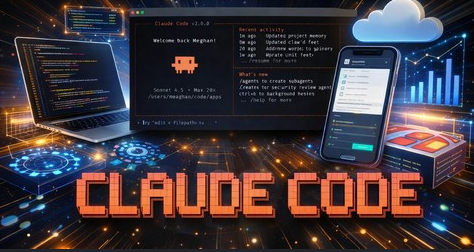
Description
COMPREHENSIVE SYLLABUS
Claude AI & Agentic AI
From Foundations to Autonomous Agent Systems
| Level | Beginner to Advanced |
| Format | Lectures, Labs, Projects, Capstone |
| Prerequisites | Basic Python; Familiarity with APIs |
| Certification | Certificate of Completion upon graduation |
1. Course Overview
This syllabus provides a complete educational pathway through Claude AI—Anthropic’s large language model family—and Agentic AI, covering autonomous agent architectures, multi-agent systems, and real-world deployments. Students progress from foundational theory to building production-grade AI agent pipelines.
1.1 Course Objectives
- Understand the architecture, training philosophy, and capabilities of Claude AI models
- Master prompt engineering, Constitutional AI principles, and safety-first design
- Build agentic AI systems using Claude as a reasoning core
- Design, implement, and evaluate multi-agent pipelines with tools and memory
- Apply agentic AI to real-world use cases: research, coding, customer service, automation
- Navigate ethical, legal, and safety considerations in autonomous AI deployment
1.2 Learning Outcomes
- Explain how Claude models work, including RLHF and Constitutional AI
- Write effective prompts and system instructions for diverse tasks
- Build Claude-powered applications using the Anthropic API
- Design and deploy autonomous agents with tools, memory, and planning
- Architect multi-agent systems and evaluate their reliability
- Apply responsible AI practices to agentic deployments
| Module 1: Introduction to Claude AI & Large Language Models |
Learning Goals
- Understand the landscape of modern LLMs and where Claude fits
- Explain transformer architecture at a conceptual level
- Describe Anthropic’s mission and safety-first approach
Topics
| # | Topic | Description |
| 1.1 | History of AI & LLMs | From rule-based systems to GPT, PaLM, and Claude — the evolution of language models |
| 1.2 | Transformer Architecture | Attention mechanisms, tokenisation, embeddings, encoder-decoder models explained accessibly |
| 1.3 | Claude Model Family | Haiku, Sonnet, Opus — capability tiers, context windows, and use-case fit |
| 1.4 | Anthropic & AI Safety | Company mission, responsible scaling policy, interpretability research |
| 1.5 | Constitutional AI (CAI) | How Claude is trained with principles; RLHF vs. RLAIF; harmlessness + helpfulness tension |
| 1.6 | Claude’s Personality & Values | Honesty, epistemic humility, refusal behaviour, and what makes Claude different |
Lab 1 — Explore the Claude API
- Set up Anthropic API keys and Python SDK
- Send your first messages; inspect token counts and latency
- Compare Haiku vs. Sonnet vs. Opus on identical prompts
| Module 2: Prompt Engineering & System Design |
Learning Goals
- Write high-quality, reliable prompts for diverse tasks
- Design system prompts for specialised Claude deployments
- Apply advanced techniques: chain-of-thought, few-shot, XML structuring
Topics
| # | Topic | Description |
| 2.1 | Prompt Fundamentals | Anatomy of a prompt: role, context, task, format, constraints |
| 2.2 | System Prompts | Persona design, persistent instructions, operator vs. user roles |
| 2.3 | Few-shot Prompting | Providing examples effectively; when few-shot helps vs. hurts |
| 2.4 | Chain-of-Thought (CoT) | Step-by-step reasoning; zero-shot CoT; extended thinking with Claude |
| 2.5 | XML & Structured Output | Asking Claude to return JSON, XML, tables; parsing strategies |
| 2.6 | Prompt Chaining | Breaking tasks into sub-tasks; passing context between calls |
| 2.7 | Prompt Injection & Safety | Adversarial prompts, jailbreak patterns, and defensive design |
| 2.8 | Evaluation & Iteration | Systematic prompt testing; A/B evaluation; evals with LLM-as-judge |
Lab 2 — Build a Prompt Library
- Create a reusable prompt template library for 5 use cases
- Implement CoT for a multi-step reasoning task
- Build an LLM-as-judge evaluator using Claude
| Module 3: Claude API & Application Development |
Learning Goals
- Integrate Claude into Python and web applications
- Handle streaming, tokens, and cost management
- Build production-ready wrappers with error handling and retries
Topics
| # | Topic | Description |
| 3.1 | Anthropic SDK Deep Dive | Python & TypeScript SDK; messages API; model parameters |
| 3.2 | Streaming Responses | Server-sent events; real-time output; chunked delivery |
| 3.3 | Token Management | Counting tokens; context window limits; truncation strategies |
| 3.4 | Cost Optimisation | Caching, prompt compression, model routing, batching |
| 3.5 | Vision & Multimodal | Sending images; document analysis; reading charts and screenshots |
| 3.6 | Tool Use (Function Calling) | Defining tools, receiving tool calls, returning results, multi-turn tool loops |
| 3.7 | Error Handling & Retries | Rate limits, timeouts, exponential back-off, graceful degradation |
| 3.8 | Production Patterns | Logging, monitoring, secrets management, API gateway setup |
Lab 3 — Claude-Powered Document Analyser
- Build a document Q&A app with PDF + image support
- Implement streaming output with a simple web frontend
- Add token tracking and cost dashboard
| Module 4: Safety, Ethics & Responsible AI with Claude |
Learning Goals
- Understand Claude’s safety mechanisms and their limits
- Apply responsible deployment practices
- Navigate real-world ethical dilemmas in AI product design
Topics
| # | Topic | Description |
| 4.1 | Harm Avoidance Framework | Hardcoded vs. softcoded limits; operator vs. user trust levels |
| 4.2 | Honesty & Deception | Non-deception, calibration, transparency, avoiding sycophancy |
| 4.3 | Bias & Fairness | Sources of model bias; mitigation at training vs. inference time |
| 4.4 | Content Moderation | Building moderation pipelines with Claude; human-in-the-loop |
| 4.5 | Privacy & Data Handling | PII risks, data minimisation, GDPR/CCPA considerations |
| 4.6 | Legal & Compliance | Copyright, liability, disclosure requirements for AI-generated content |
| 4.7 | Dual-Use Risks | When capabilities become dangers; red-teaming your own system |
| 4.8 | AI Governance | Policy landscape, EU AI Act, NIST AI RMF, internal governance |
Midterm Project — Claude-Powered Application
Build a complete Claude-powered application with a real use case. Must include: system prompt design, multi-turn conversation, at least one tool, safety guardrails, and a reflection on ethical considerations. Presentations in Week 8.
| PART B: AGENTIC AI — Autonomous Systems & Pipelines |
| Module 5: Foundations of Agentic AI |
Learning Goals
- Define agentic AI and distinguish it from standard LLM use
- Understand core agent loop: perceive → plan → act → observe
- Survey major agent architectures and frameworks
Topics
| # | Topic | Description |
| 5.1 | What is Agentic AI? | Definition; autonomy spectrum; task complexity vs. oversight tradeoffs |
| 5.2 | The ReAct Pattern | Reason + Act interleaved; trace analysis; when ReAct succeeds/fails |
| 5.3 | Agent Loop Architecture | Environment, observation, thought, action, feedback loop in detail |
| 5.4 | Tool & Action Spaces | Search, code execution, file I/O, web browsing, API calls as agent tools |
| 5.5 | Memory Types | In-context, episodic (vector DBs), semantic, procedural memory stores |
| 5.6 | Planning Strategies | Chain-of-thought, tree-of-thought, goal decomposition, MCTS |
| 5.7 | Agent Frameworks Overview | LangChain, LlamaIndex, AutoGen, CrewAI, Claude’s native tool use |
| 5.8 | Benchmarks & Evaluation | WebArena, AgentBench, GAIA; measuring agent reliability |
Lab 4 — Build a ReAct Agent
- Implement a ReAct agent using Claude + Python from scratch
- Give it web search and calculator tools
- Trace and debug agent reasoning steps
| Module 6: Memory, Knowledge & Retrieval for Agents |
Topics
| # | Topic | Description |
| 6.1 | RAG Architecture | Retrieval-Augmented Generation: chunking, embedding, retrieval, reranking |
| 6.2 | Vector Databases | Pinecone, Weaviate, Chroma, pgvector — setup and querying |
| 6.3 | Embedding Models | OpenAI, Cohere, sentence-transformers; choosing the right model |
| 6.4 | Hybrid Search | Combining dense + sparse retrieval; BM25 + vector fusion |
| 6.5 | Agent Working Memory | Sliding window, summarisation, context distillation strategies |
| 6.6 | Long-term Memory | Storing and retrieving agent experiences; episodic memory design |
| 6.7 | Knowledge Graphs | Integrating structured knowledge; Neo4j + LLM reasoning |
| 6.8 | Memory Consistency & Privacy | Avoiding hallucination from stale memory; PII in memory stores |
Lab 5 — RAG-Powered Research Agent
- Build a document ingestion pipeline (PDF → chunks → embeddings)
- Connect Claude to a vector DB for grounded Q&A
- Implement context distillation for long research sessions
| Module 7: Multi-Agent Systems & Orchestration |
Topics
| # | Topic | Description |
| 7.1 | Multi-Agent Motivation | Why single agents fail at complex tasks; division of labour |
| 7.2 | Orchestrator–Subagent Pattern | Claude as orchestrator; delegating to specialised subagents |
| 7.3 | Agent Communication | Message passing, shared state, blackboard architectures |
| 7.4 | CrewAI & AutoGen | Framework-level multi-agent: roles, crews, conversations |
| 7.5 | Model Context Protocol (MCP) | Anthropic’s MCP standard; building MCP servers and clients |
| 7.6 | Parallelism & Fan-Out | Parallel subagent execution; result aggregation; race conditions |
| 7.7 | Conflict Resolution | Disagreement between agents; voting, consensus, hierarchy |
| 7.8 | Reliability & Error Recovery | Checkpointing, retry logic, fallback agents, dead-letter queues |
Lab 6 — Multi-Agent Research Pipeline
- Build a 3-agent system: Researcher, Writer, Editor using Claude
- Implement MCP server for tool sharing between agents
- Add orchestrator with task routing and error recovery
Research Paper Due — Week 12
15-page paper on a chosen agentic AI topic. Topics may include: reliability of autonomous agents, memory architecture trade-offs, MCP ecosystem analysis, multi-agent coordination protocols, or agentic AI in a specific domain (healthcare, legal, finance).
| Module 8: Agentic AI in Production |
Topics
| # | Topic | Description |
| 8.1 | Production Architecture | Microservices vs. monolith for agents; queue-based workflows |
| 8.2 | Observability & Tracing | LangSmith, Langfuse, Arize; distributed tracing for agent loops |
| 8.3 | Latency & Cost at Scale | Async execution, caching, model routing, cost budgets per task |
| 8.4 | Human-in-the-Loop (HITL) | Interrupts, approvals, escalation triggers; keeping humans informed |
| 8.5 | Security for Agents | Prompt injection in agentic contexts; sandboxing code execution; secrets |
| 8.6 | Agent Testing Strategies | Unit tests for tools; integration tests for loops; chaos engineering |
| 8.7 | Deployment Patterns | Docker, Kubernetes, serverless functions for agents; long-running jobs |
| 8.8 | Agent Versioning & CI/CD | Prompt versioning, model pinning, regression suites, canary deploys |
Lab 7 — Production-Ready Agent Deployment
- Containerise a Claude agent with Docker
- Add distributed tracing with Langfuse
- Implement HITL approval step for high-stakes actions
| Module 9: Advanced Topics & Future Directions |
Topics
| # | Topic | Description |
| 9.1 | Frontier Models & Reasoning | o1/o3-style extended thinking; Claude’s reasoning modes; what’s next |
| 9.2 | Multimodal Agents | Agents that see, hear, and generate images/video; computer-use agents |
| 9.3 | Embodied & Robotic AI | Connecting agentic AI to physical systems; ROS + LLM integration |
| 9.4 | AI-Assisted Software Engineering | Claude Code, Devin-style agents; the future of developer tools |
| 9.5 | Autonomous Research Agents | AI scientists; hypothesis generation; lab automation |
| 9.6 | Economic & Social Impact | Labour displacement, new job categories, AI as colleague |
| 9.7 | Long-Horizon Safety | Alignment for agentic systems; corrigibility; value lock-in risks |
| 9.8 | Open Problems & Research Frontiers | Reliability, world models, genuine autonomy — what remains unsolved |
Reviews
There are no reviews yet.